Billing teams
Find the documentation a policy requires and read the source before preparing a claim.
Create accountWhat documentation does this policy require?
Published requirements and their sources
Research coverage policies from Medicare and commercial payers, check prior auth requirements, and follow policy changes. For billing, revenue cycle, and compliance teams.
Create account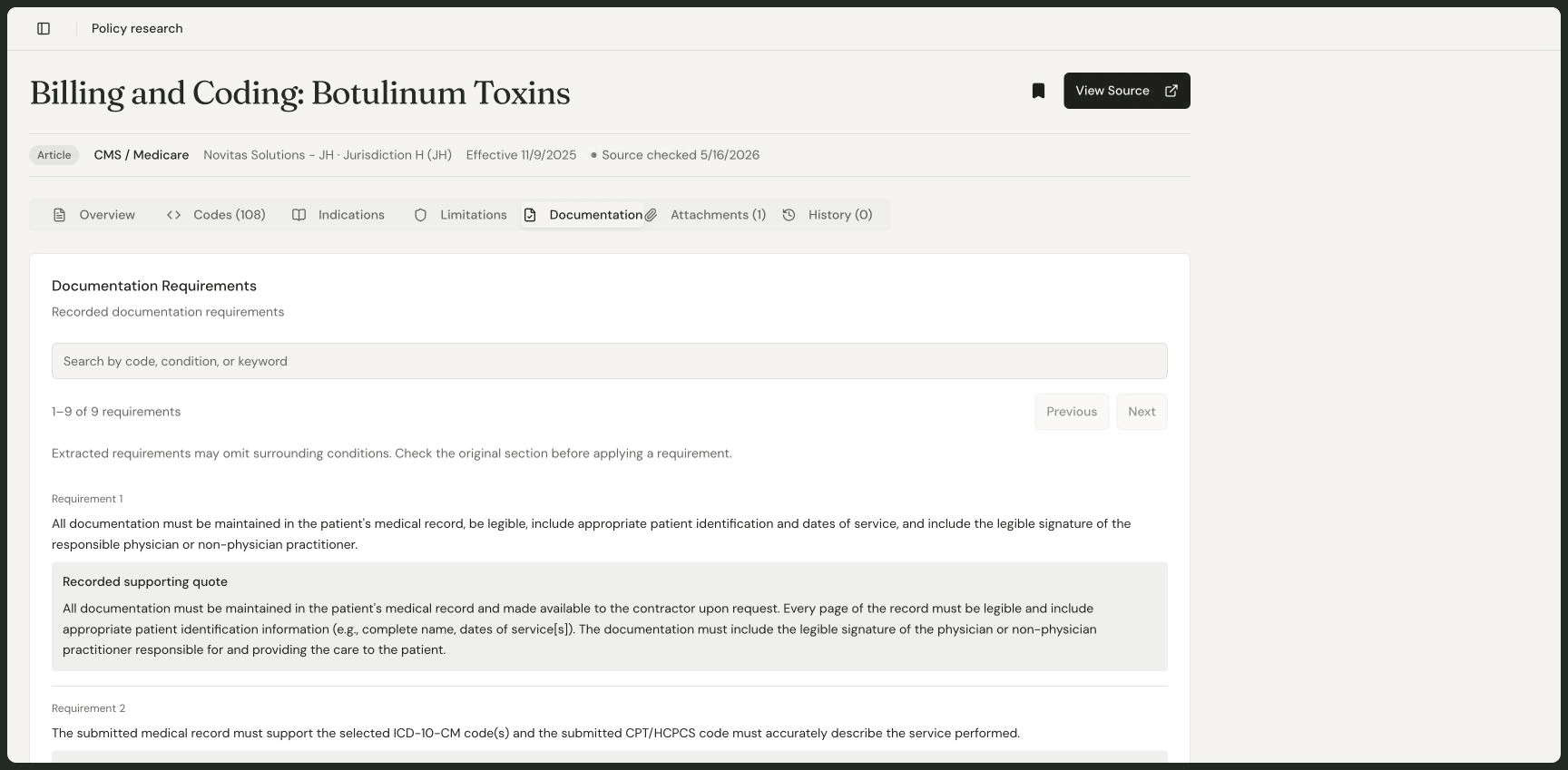
Commercial payers include Molina Healthcare, EviCore by Evernorth, Blue Cross Blue Shield of Michigan and Blue Care Network, UnitedHealthcare, AmeriHealth, and Independence Blue Cross. Medicare coverage comes from CMS local and national coverage documents. See every payer
Find documentation requirements and check published policies against your team’s research.
Find the documentation a policy requires and read the source before preparing a claim.
Create accountWhat documentation does this policy require?
Compare policy evidence with your team’s research. Keep assumptions and open questions visible.
Create accountCheck the policy behind each finding.
Start with a code and payer, without patient information.
Review the requirements and their published sources.
Confirm the current policy and plan requirements with the payer.
No. Backwork helps research published policy requirements. Your team still verifies patient eligibility, plan requirements, and coverage with the payer.
Create a Backwork account with your email or Google.
Create accountKeep patient information out of your questions. Privacy Policy.